[00:00:00] Speaker A: Hey, thanks so much for listening to this message. My name is Jason, and I'm one of the ministers here at the Madison Church of Christ. It's our hope and prayer that the teaching you hear today will bless your life and draw you closer to God. If you're ever in the Madison area, we'd love for you to stop by and study the Bible with us on Sundays at 5pm or Wednesdays at 7pm if you have questions about the Bible or want to know more about the Madison Church, you can find us
[email protected] be sure to subscribe to this podcast as well as our Sermons podcast, Madison Church of Christ Sermons. Thanks again for stopping by. I hope this study is a blessing to you.
[00:00:37] Speaker B: All right, well, I'm excited about being here. Y' all had this. We've had this quarter where we've had another each. Each week a new teacher, right. That has come in. And I hope you've enjoyed that particular format that's been set up.
Mike wanted us to start. Mike Becker wanted us to start our class the same way. And each week I've. I've started it off the same way. So I'll do the same tonight.
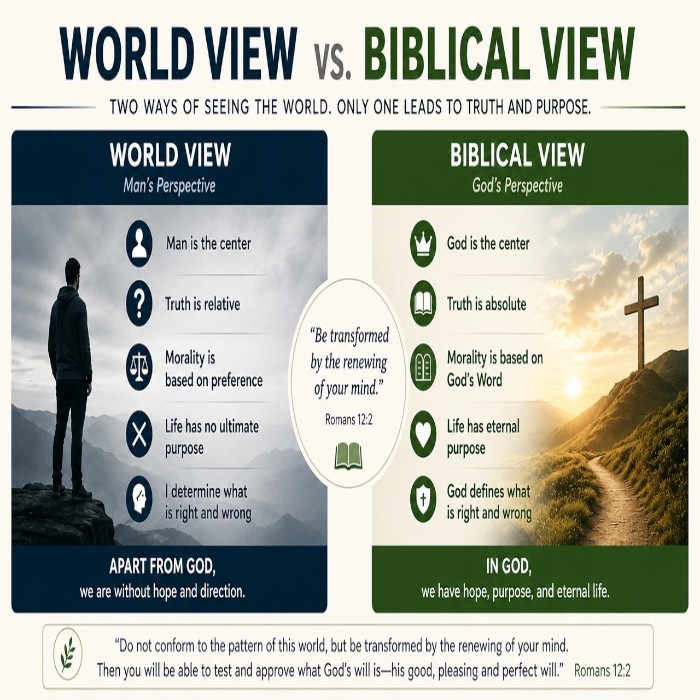
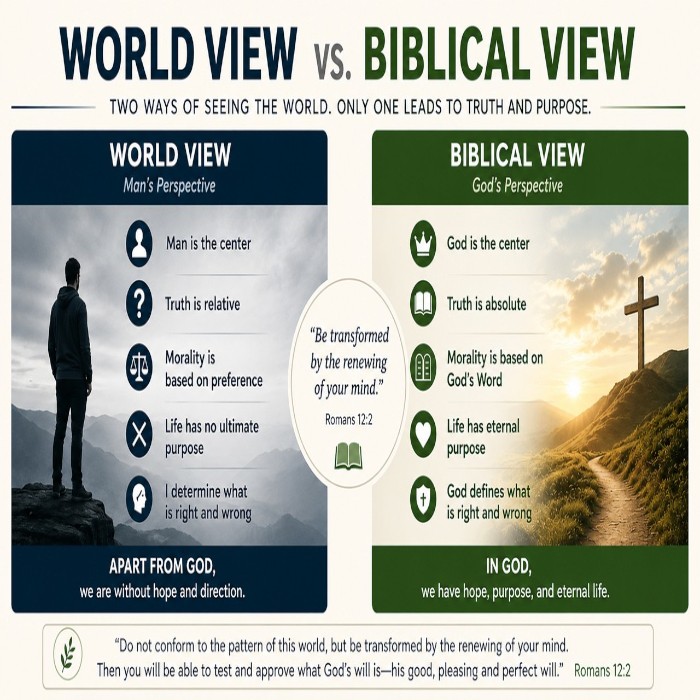
You know, if you think about your life, you think about everything and decisions that you make, everybody has a different perspective or a lens, if you want to call it, or filter that they actually see the world through. And it's interesting because I don't know if you're. You know, for those that grew up here at Madison, your paradigm has been, okay, well, this is what Madison Church of Christ is. And then for those that have not, you came maybe from a different church somewhere, and you're like, well, we didn't do it that way or we did it differently and how you saw that and whatever it might be and the challenge for all of us, and I hope that tonight that you take away from this lesson more than anything else is the fact that in all of our decisions that we make, that we use that filter of God's word to make those decisions. And we look and we say, hey, it's not because of what Andrew or Brandon has said. It's not because of what our shepherds have said. It's not because of what any teacher has said, but it's because of what God has said. That's what I want to do, and that's what I want to follow.
[00:02:00] Speaker C: And.
[00:02:01] Speaker B: And I pray by the end of this lesson, I'll probably overemphasize that because in a world today where when we're raising Our children. And what does that look like?
We're going to talk about that. So what we're going to talk about tonight is a God made versus self made. Okay? And I also want to say some people look to me a little crazy, but I don't know if your other teachers have said this, but part of our material, he put a paragraph in there at the very beginning that I thought was a very interesting statement.
And I wanna read it because I don't wanna get it wrong. But he just said it's not just about getting it right.
Okay, what does that mean to you if I say it's not just about. Cause when I read that, I was like, well, if it's not about getting it right, then what is it about?
[00:02:51] Speaker D: Connection with somebody.
[00:02:53] Speaker B: Okay, Exactly, Caleb. I mean, the thing, the fact is, is this, is that Jesus, what is our mission?
I mean, go obviously and teach, okay? And make disciples of all nations, baptizing them in the name of the Father, Son and the Holy Spirit, right? And for us to be able to do that. And our mission is to do that. So the idea of saying, hey, I want to get it right, yeah, with God's word, but also what am I doing right now to bring the people around me, help introduce them to Jesus, to help them know. Because that's what our mission is, okay?
And even more so with our children, right? I mean, that's what we want to do. And so, you know, the thought process of what that means, you know, too. So as we talk about this tonight, as far as self made versus God made, I want you to understand that, you know, there's a statement by this gentleman right here and his name is Augustus Toplady, okay? And he was an Anglican cleric who actually lived and, you know, made several. Actually, he's known more than anything else. He wrote the Rock of Ages, the hymn Rock of Ages. Okay. I think everybody knows that, right? So sort of relate. That's who wrote that. But he made this statement right here. He said, the greatest judgment which God can in the present life inflict upon a man is to leave him in the hand of his own boasted free will. What does that mean? What does that statement mean to you when you read that?
The greatest judgment which God can in the present life inflict upon a man is to leave him in the hand of his own boasted free will. What does it mean to you?
Okay. If we decide to take things into our own hands, okay. That we may take, you know, face the consequences for those things, okay? Which is interesting because the fact that There's a lot of things we take into our own hands, right? I mean, how many of y' all like to win?
Okay, I ran into, like, I need to go up immediately. All right, okay. And there's some that actually like to win more than others. But I think we all like to win. All right? Whether it be a sport, whether it be card games, I don't care what it is. It doesn't matter what it is in life. I mean, most people like to win. So let me want you to think about this question. When we see an athlete or we see somebody put so much time and energy and pain and discipline into a program, okay, are they doing it, you know, are they doing it for themselves or are they doing it for Christ?
Okay?
When you do that, when you have your children to do that, okay, Think about it. When you push yourself, when you push your child, whether, you know, whatever kind of ball or whatever kind of schoolwork or whatever it might be, do they know?
Are they doing it for that event and for themselves?
Okay? And think about this.
Is it for God or is it for me?
Now, you know, I'm really going to hit hard here because I'm the same way, you know, thinking about this from the standpoint of when our children were coming up and we were raising them and we were doing what we were doing. You know, the idea of, what does that look like? Okay? Am I doing it for God, or is it, you know, or is it for me or is it for them?
But who are we doing it for? I want you to think about this because I really believe that thought right there really helps to define, okay, your self made versus God made thought.
Can anybody tell me how this makes your self made or God made thought?
I'll give you an example.
In fact, it was actually Alyssa. I was able to be an assistant basketball coach at Madison Academy on the varsity girls for about seven, seven or eight years.
And one of the first, in fact, the first year coach Brian Privett, he was the varsity girls head coach.
And I mean, like the first week of practice, literally in the middle of practice, and the girls were just. I mean, it was hot, they were sweating, they were breathing hard because they had been running. And he had everybody come to the middle of the gym floor and he pulled out a Bible out of his back pocket and he started reading from the Psalms.
And I was like, what?
This is basketball practice. What are you doing?
Right?
I mean, I wasn't negative about it. I was just like. I was just thinking, well, what is this? I mean, this is not, this is not, we're not a Bible class right now kind of thought. And I think by the end of that season or the next season, we'd baptize one or two of those girls.
And he taught me so much about the fact that, hey, and I still didn't do it enough.
And I hope, and like I said, I'm going to overemphasize this.
Whatever you're doing today, does your children know that you are doing it for God and it comes from God or is it for them?
And that's hard, right? It's not an easy thing, okay? I'm not saying this is easy, but I'm just saying for us to be reminded of this from a self made versus God made kind of thought process because, you know, we serve an invisible God, y', all, in a very, very visible world today, okay? And we often forget, really. I think a lot of times we forget the source of our success and our children don't understand and know where that comes from, okay? And helping them try to understand what that looks like in terms of when failures happen and success may not happen.
Who does that come from? And where do our blessings come from in this life? Some kind can be so, so difficult.
So in that quest for really self reliance, we're tempted to attribute our successes only a lot of times to our own work and wisdom, okay? But the scriptures teach us totally different.
And some of the verses we're going to look at tonight are pretty strong towards that. Before we get into that though, before we get into our scripture real quick, I want to talk real quickly about the self made man, okay? When we talk about the self made man, it really, it has become one of the foundational ideas for our country, if you think about it. And I'm not going there, I'm not going to politics or anything else, but in a general sense, you know, if you're a self made man, you've done it yourself, you actually do it yourself, okay? And there's good reasons for that. It really reminds us of the importance of hard work and we don't want to, you know, demean that at all, okay? And it reminds us about perseverance and it gives each person hope a lot of times, okay, that they may have a lot of possibilities in their life and there's nothing wrong with that at all. But it also leads to a term that we call individualism, okay? It leads to a term that says, hey, I can do it by myself, okay? I can be, I don't have to be dependent on other people. Okay. That's sort of the thought process that we have a lot of times, as it goes, there's.
And so what happens is this. And this was a research study that was done by Pew. Okay? Pew is one of the companies that does a lot of research. And one of the research studies they did was called the Economic Mobility Project. It was done back in the 2008, 2009 time frame. And what was interesting about this study was, is that 71%, 71% of the respondents said that personal attributes, okay, Personal attributes were the key factors in success.
Okay? What.
When you say personal attributes, what do you think of as personal attributes?
Work ethic, personality traits. Okay? What they said about this, and what was interesting was that we gravitate, obviously, to some of those stories, but what they were saying was, is that it basically said that personal attributes led to success and not necessarily where you were born. Not necessarily. You follow what I'm saying as far as, like a lot of people talk about. Well, and we're not. I'm not here to argue that one way or the other. It's just this is what this study showed, okay. You know, over overall. But what it said was, is that personal attributes, you know, were the thing that does that. What's interesting is, is that we do gravitate toward that. And what do I mean by that? I use a lot of those personal success stories in my class with Project Rescue, and I'll show about somebody that has succeeded, right? That has worked hard, had a good work ethic, had a good attitude, had a, you know, fill in the blank, right? And they've done that. And we like. And that's awesome. When we see that, it's like, it gives us motivation. It's inspirational to us, right? As far as being able to see it. And we're thankful for that. But that can become unhealthy, okay? And it become unhealthy because we're focused on the flesh. We're focused on now and not focused on the spirit, okay? So as we look at this, it leads to a thing that we call the fundamental attribution error. Y' all stay with me. We're gonna get through our scripture in just a second. This sort of introducing this self made versus God made thought, the fundamental attribution error is a flaw in our thinking, okay? And it goes something like this. This is what it says. It says when I make an error, okay? And this is me, okay? This is me to a T. When I make an error, it's because of external factors. Or circumstances, not some inherent flaw in my disposition or personality. But when others make an error, it's because of some inherent flaw in their disposition or personality, not external factors or circumstances. Does anybody else like that? I see some eyes going to the.
You know, there's some spouses like, okay, how does that. How do. How does that happen in life?
[00:12:43] Speaker C: It's kind of like that. I don't know if it's an adage or whatever, but I judge myself by my intentions, but everybody else by their actions.
[00:12:49] Speaker B: Yeah. I mean, you're driving down the road, right? And you're speeding because you've got to your child, you're taking them to the emergency room. And I mean, you know, you're going 80, and you're flying by somebody, and they're. You know, they're.
And then the next day, somebody comes flying by you and cuts you off, and you're like, what in the world?
They can't do that.
But the day before, you were doing it, and it was, okay, because. Why?
All right. I mean, in most everything in life, we look at that a lot of ways. It's like the story, actually, from, you know, from Stephen Covey, right? Stephen Covey wrote the Seven Habits of Highly Effective People, right? And in that book, he wrote a story about the Subway Man. Y'. All. Anybody read that book?
Okay, maybe y' all need to read that book sometime. All right? But the Subway man was.
He was in New York, and everybody was on the subway, and they were minding their own business. Of course, they were coming home from work, and it was quiet. People were reading. You know, some people were resting their eyes. And then on the next stop, this man gets on with three children, and it just all of a sudden became a zoo, okay? All that quietness and everybody relaxed and everything. And this man sat down next to another man, and his children were just running around, hanging off the bars, hitting people's newspapers, just doing all kinds of stuff. And the guy that was sitting next to him was looking around the subway car, noticing everybody was getting a little bit irritated, right? And they were like, hey, can you not do something with your children?
And so eventually, this man that was sitting next to him said, well, I'm going to say something to him. And he.
He sort of. Because the guy sort of had his eyes closed, and he was, you know, had his head. His head down. He was not, you know, sort of not there. And the guy, you know, sort of knocked him on the shoulder and hit him on the shoulder and said, you know, sir, hey, sir, you Know, you know, your kids are out of control. And the man sort of, you know, startled, got, you know, shook up a little bit. And he goes, oh, yeah, yeah. He said, I'm sorry, I'm sorry. And he said, well, I was wondering if there's something you could take care of them. And he looked at that man and he looked at him and he said, well, we just came from the hospital where their mom died an hour ago and I don't really know what to do.
Well, the guy that was all irritated now, now what did he feel? What was his thoughts then?
Oh, he changed immediately. He goes, oh, I'm so sorry.
What can I do? What can I do to help you? Whereas before it was like, okay, and I want to read this to you because I want y' all to, you know, why do we think like that?
And maybe you don't. If you don't, that's awesome, okay? But why is it that when we're at the line at Walmart and somebody gets in with more than 10 items in the 10 item or less checkout line, we don't like that.
Why is that?
They're breaking the rules, okay? We think they're breaking the rules.
Maybe they have a valid. Maybe something was. They need to do that quickly.
You follow what I'm saying? I mean, it becomes one of these things. So I'm going to read something to y'.
[00:15:48] Speaker C: All.
[00:15:49] Speaker B: I believe when we are focused on being self made, we tend toward judgment.
When we focus on being self made ourselves, we tend, okay, on judgment, you know, toward the way that we see people around us because we think they're breaking the rules, okay? And you say, well, they are breaking the rules.
Well, you know, David let his soldiers eat the bread when they weren't supposed to because they were going to starve.
They were breaking the rules, but he was saving their lives. I mean, the idea for us is to understand today of what are we focused on. So I don't have a problem, y' all accepting the fact that man can actually struggle, you know, in life, okay, in his own way to become something or somebody in life. I don't have a problem with that.
But without God, without God, nobody can ever become exactly what he's been created to be, okay? What God created him to be, just to be something or somebody in life is not what it's about.
Because God is going to take you and he's going to take me and he's going to make a masterpiece out of every single person. That's what he's going to do with his plan his entire life. So.
So what do we do with our families? I'll challenge you. Is that for that? That was a subway story there. But if you think about it, let God make you, okay? And how do you let God make you? There's a verse that I've never really thought about, but Matthew 4:19, this is where Jesus was calling the disciples.
And Peter and Andrew were there. And when he called them, and he said to them, follow me, and I will make you fishers of men.
If you think about that verse, it's very interesting because when Jesus said, follow me, he said, and this is what I want you to focus on. He says, I will make you.
Have we thought about the fact that Jesus is making us every single day? Are we allowing him to make us or are we doing it ourselves?
There's a fundamental foundation there that. For us to understand and for our children to understand and to see, hey, it's not about what I've done, okay? It's about what he's done, in fact, without following Christ. And that's really. You make. You know, your making is in following Christ, okay? And for us, we can never be made into that man or woman that he created us to be without following Christ.
You can't be made by following the crowd or even following ideas. In fact, Proverbs chapter 3, verses 5 and 6 says this. Trust in the Lord with all your heart and do not lean on your own understanding. In all your ways, acknowledge him, and he will make straight your paths. A verse that we all know very well. So in becoming what God wants you to be in life, you have a responsibility, and I have a responsibility. What is that responsibility?
So in our life, we have a responsibility, a very basic responsibility. And this first verse really says it from Matthew 4:19. What is that responsibility?
Yep. Okay. Exactly. So to follow Christ, that's our responsibility.
And you say, well, it's very simple, okay? To be what it is, but follow his leading. Follow his instructions, okay? Even when they don't make sense, you follow his commandments, you follow him day by day, and you follow him all the way, okay?
You may not realize it, but you're being made and crafted into that man or that woman you were created to be. When you follow Jesus, okay? And for us to understand that. I meant to say this at the very beginning of this lesson. I forgot.
This is a very simple lesson.
This is not a lesson that's like, that we get really deep in.
It's a very simple lesson, but it's one that I think that we struggle with. In how. That we teach our children about what happens to them in this life.
So where are you today? Where are you and your family today in letting God make you okay, so we're going to look at two different things tonight. We're going to look at the false story, and we're going to look at the true story. All right, the first false story we're going to talk about is from the Israelites in Deuteronomy 8, 10, 20. Let's read this story together.
And you shall eat and be full. And you shall bless the Lord your God for the good land that he has given you. Take care, lest you forget the Lord your God by not keeping his commandments and his rules and his statutes, which I command you today.
Test when you have eaten and are full, and have built good houses and live in them, and when your herds and flocks multiply and your silver and gold is multiplied, and all that you have is multiplied. Okay, then verse 14 says, then your heart be lifted up and you forget the Lord your God, who brought you out of the land of Egypt, out of the house of slavery, who led you through the great and terrifying wilderness with its fiery serpents and scorpions and thirsty ground where there was no water, who brought you water out of the flinty rock, who fed you in the wilderness with manna that your fathers did not know, that he might humble you and test you to do you good in the end.
Beware, lest you say in your heart, my power and the might of my hand have gotten me this wealth.
That last statement, beware, lest say in your heart, my power and the might of my hand have gotten me this wealth. I would go around this room tonight and I would probably say that there's nobody in here that's going to say, well, I believe that I'm the one that have gotten that.
I believe that everybody in here will say, God has helped me to get to where I am. Amen.
Okay, but does our. But here's where it hits me. Does our children know that? Does my grandchildren know that?
Have I. Do I speak that?
Do they hear me say that when they're successful, when they get A's, when they win their ball games, when they do whatever, when they lose their ball game, it doesn't matter. Do they know that it's God who is in control and who's leading my life?
Some of y' all tell me your thoughts about that.
Is that silly?
It's not silly. Okay. Lisa's like, going, that was crazy, dad. Okay, it's not silly. But what but do we do may not be silly, but do we talk, do we talk that way to our children?
Do we speak that to them when they hit a home run? Do we go and tell them, hey, God obviously helped you be successful in that.
Is that a right or wrong way to do that?
Think about it.
Because like I said, I was there when I was on the basketball court and he pulled that with that Psalms.
And what Coach Privet taught me at that time was, is that every part of. I'm not going to compartmentalize my life. I'm not going to take my school over here and my sports over here and, and church over here, and then I'm just going to do that. Then I want them to know that this is the most important, okay? Because ultimately that, that this doesn't happen to me. All right? What would cause the Israelites here, okay, to believe in their own power and strength? What would cause that to happen?
[00:23:23] Speaker D: Well, back to your other question.
It's a lot of times, like when we ask for like prayer requests, we only ever bring up negative stuff, like when we need help, but we don't ever bring up like celebratory things too. And far between do we get like, you know, oh, you know, this good thing happened in my life or whatever. It's always, you know, I need help with this element or I need help getting, you know, this thing or whatnot. So I think it's the same kind of mindset. Like we teach our kids to ask God for things, but we don't necessarily teach our kids as much to thank
[00:23:53] Speaker B: God for things, okay? And to be grateful in that. Okay? And having that balance to understand and know that, hey, they need to work hard. It's okay. Okay? For that, God made us that way. But to understand that God provides, okay? And sometimes the answer may not be what we want.
Maybe that's what we know from the loss. That may be what we need at that particular time in our life. And for us to understand that is difficult, okay? But also the fact that we don't bring it up a lot of times and we need to really speak it more. I believe we need to focus on that so they know that, hey, God is the person in control. He is the one that's leading my life, not that I'm doing it myself, because we can get very easily in our society today. We can become self made.
And they believe that, oh, dad, you did it. Oh, no, I didn't do it.
Because it can be taken away just like that, all right? As hard as you worked, it can be gone just like that. All right? And we all know that, all right? We've seen that, you know, that happened, you know, for us. So if you think about this, and this is. So let me ask that question again. Why would. What would cause the Israelites here to believe in their own power and strength?
It says that they, they. They believed in their own power and the strength and might of their hands. What would cause them to do that, to believe that?
Why would the Israelites think that way?
[00:25:20] Speaker C: God shows the people favored, and you can get prideful in that.
[00:25:23] Speaker B: I don't know the context of Deuteronomy 8 or 7.
Well, so think about the Israelites and everything that God had done for them.
I mean, look at what all he'd done for them.
He led them through the wilderness, right?
With the fiery serpents and scorpions. He provided water to them when they were thirsty and they were about to die. They were about to die at the Red Sea. And he parted the Red Sea for them. For them.
He fed them manna, right?
He provided quail meat.
He gave them a lot of stuff.
And as they still worked and worked hard through the wilderness, but all of a sudden now it's like, hey, they got to that point to where they were not humble. I call it pride.
Other classes of many people that said abundance.
What causes us to think that the power and might of my hand has gotten me my wealth?
[00:26:21] Speaker D: Is this also where like that whole generation had to pass away before they could enter in the promised land? So then they haven't passed down the
[00:26:29] Speaker B: stories for what has happened, for where they've come from? So for us, Chris.
Yeah, exactly. So for us, what does that look like today in our homes and our food and all the stuff we do compared to the rest of the world?
Do our children know that God is the. What is helping us with that? Or is that just what we've worked hard for?
Because we've studied hard and we made great on the act. And we did all this because you won the championship, because you worked hard. You worked hard. You worked hard.
We put God in there anywhere, okay? I mean, I'm shooting on toes a little bit, but I'm just saying, I'm trying to remind us. I want my children, I want my grandchildren to know it's not all about their hard work.
God is in control. He's got control of this and he's going to take care of it for us, okay?
And I'll tell y', all, I'm Right there. This lesson. God gave me this lesson because of my life right now.
You know, I retired last year at 58 years old.
And all I've been doing for the last year. What do you think I've been doing for the last year?
What do y' all think I've been doing?
Don't say nothing. Okay? Whatever you want to do. No, what I've been doing is looking at my retirement account thinking, well, am I going to make it for 30 years?
Y' all follow me. And it's like, why do I not believe that God is going to take care of me?
Y' all see what I'm saying? Everybody's looking to see, well, what's the stock market doing today? And am I going to have enough?
Do we believe that God's going to take care of us?
I mean, I'm just telling y'. All, I'm just. I'm saying it's. To me, this lesson. God gave me this lesson because it was like, okay, hey, don't worry about that. It'll take. And somebody said, well, if you do that, then you're just going to lose everything.
We still can work hard, but we can also let our children, all of us know in our mind and say. And say, hey, I hear it all the time, y'. All. This. Well, let me go on, because I want to finish this lesson. Because we got to get to the true. We're on the false story right now, okay? The false story is this. The false story says, success is a result of one's efforts, talents, and determination.
Okay? Now, that's the false story.
Now, that's hard because you're telling your children, probably, hey, if you work hard and, you know, you're talented and you're determined, then you're going to succeed. You're going to do well, right? That's the false story. Why is that false?
God's not in there at all. That mindset can lead to pride. That mind will lead to pride. Okay? I put it like this.
To pride in our lives and achievements and success, okay?
So many times. And really, just like Nebuchadnezzar did, y', all, it's kind of like him. We'll attribute everything good that has happened, okay? We'll attribute to everything in our life that's good to our. A lot of times, to our own actions, okay? To our own ability. Okay? Think about this. That, you know, it's because I thought, you know, I brought this on. I manifested this in my life because of the hard work that I've done, okay? Maybe it's because of my good looks. Okay, okay. Don't laugh or anything. But he said, you know, maybe it's my winning personality. People would say, okay. Kind of thing. People say, well, your personality is that or whatever it might be that has brought all this about in my life.
And we have an old cliche. And the old cliche is that I pull myself up by the boots and the bootstraps, right? I pull my. I'll get to real quick. I pull myself up by the boots and the bootstraps.
And we forget who made and gave us the boots and the straps and even made the ground that we're standing on.
We don't say anything about that. I pull myself up on my bootstraps. But, hey, the God of the universe is the one that gave them to me.
Do I know that? Do my children know that?
[00:30:27] Speaker C: I mean, it's heavy control.
Just like, for example, we read from Deuteronomy.
Brandon was talking about also, you know, ten Commandments, what happened when Moses went to Mount Sinai, how long he was on that mountain. Okay, they start questioning. You know, he took God, took us over here.
Our mediator is not here. Let us do something about it. So taking responsibility from God, to put that in our hands, that shows that determination. You want to show that talent? Hey, we can build something. Hey, we had something over there. Let us bring it over here.
There is a lot going on. And the way how we're going to put value, we. We have to understand that you. You quoted from Matthew 4 immediately. I was thinking about Matt, Mark 8, you know, the, the cost of discipleship, how you got it. So what do you have to do? First, you have to deny yourself. Take your cross and follow me.
But to follow him, what does it mean? You have to deny yourself.
[00:31:27] Speaker B: So how do we balance all that?
Because it's almost like, okay, well, if I just. I was like, okay, God, you've got it. You know, I'm just going to give it all to you, right?
How do our children.
How do we balance that with helping them with talents and determination and work ethic and success and all of that?
[00:31:50] Speaker E: He would always say, we'll just pray about it.
[00:31:52] Speaker B: Okay, all right, yes, we agree.
[00:31:56] Speaker E: But he would sit back and not do anything.
[00:31:58] Speaker B: Okay?
[00:31:59] Speaker E: It's that balance of, yes, we've got to pray to God. We've got to trust that he's going to work in our lives, but he's still expecting us to do something.
And if we're not working towards some goal that we have, I always think Back to, you know, Solomon says, you know, when you seek him, you will find him. We're not going to find him if we don't seek him.
[00:32:24] Speaker B: Okay?
[00:32:25] Speaker E: So that means there. There has to be action on our part, but yet we've got to let him. So it's like halfway.
[00:32:33] Speaker B: Okay?
So I like what. I totally love what you're saying, because ultimately, that's what we're going to get to next as far as what the true story is about.
Okay. But the balance part of it, to me is where I don't want to lose.
I think in America, I'm just gonna say it. I think we lose some of that. You guys know probably a little bit better than anybody from where you come from and where you lived a lot of your life, okay? And maybe there's others here that have had that same kind of background. But the idea of how that we just do it ourselves and our children never hear us saying, hey, well, God provided that I want to speak, that I challenge you this week, next week, continue to get into that habit of speaking that to God or about God to your children, about that, that he provided the food, that he did this for us. We're thankful for that. And when something bad happens, then say, hey, well, God's got a plan here. We don't understand it. A lot of times we can't understand it because we're in this, we're in the flesh. But for us to know, when we speak that to our children, so they hear that, and then we work and we continue to work, but they know in the background that, hey, it's going to be okay. Okay? And it is going to be fine, all right? For us to understand that. So what is the true story? The true story is this. Isaiah 64, verse 8 says this. But now, O Lord, you are our Father, we are the clay, and you are our potter, and we are all the work of your hand. Okay? And Jeremiah did this. Okay? And this is what I think. Even Andrew referenced this a couple weeks ago in his lesson. But when he said in chapter 18, the word that came to Jeremiah from the Lord, arise and go down to the potter's house, and there I will let you hear my words.
So I went down to the potter's house, and there he was working at his will. And the vessel he was making of clay was spoiled in the potter's hand. And he reworked it into another vessel as it seemed good to the potter to do.
Then the word of the Lord came to me. O house of Israel, can I not do with you, as the potter has done, declares the Lord. Behold the clay in the potter's hand.
So are you in my hand, O house of Israel. So what is the proper attitude of the clay toward the potter?
What's the proper attitude of the clay toward the potter?
Okay, to be malleable.
And what does that mean, John?
And maybe, you know, maybe you're at a point in your life to where not just you, for all of us, maybe we're at a point in our life where, man, we are a good looking pot.
Okay? We've got this clay pot that looks awesome, right? And then have y' all ever seen where he talks about right here where he says that and the vessel he was making of clay was spoiled in the potter's hand and he reworked it into another.
Have you ever seen where they just took what they were doing because they didn't like it and then they just mashed it all together again and it looks awful, right?
The clay doesn't sit there and go, well, why did you do that?
You may be at a point in your life right now, a lot of y' all are not.
But every week I talk to men who.
They're in that shape and they're being reworked, and at some point in your life, that's gonna happen.
I don't know when it is. I don't know what point that may be, but he's taking you and molding you and doing. And to be malleable from the standpoint of, hey, to be workable, to say, hey, the attitude is that you're the potter, I'm the clay, you can do with me whatever you want.
[00:36:18] Speaker E: You said at some point in your
[00:36:20] Speaker B: life, but I don't know that there's
[00:36:21] Speaker E: been a time in my life where I didn't need to.
[00:36:23] Speaker B: Okay, all right, I like that.
Yeah, absolutely. Okay. And that even goes to that self made, God made, Right. I think it points in our life of what we think that we don't need to be worked, but it's always a work in progress every day, you know? Great point. Okay. For us to know and for us to understand.
So what do our children see from us about who is leading our life? Who is getting the credit? Who is the potter? Do they know and understand that? Okay, so here's what the true story says. The true story says this. Deuteronomy, chapter 8. This is the very end of those verses that we just read from Deuteronomy. He said this. You shall remember the Lord your God, for it is he.
You wonder whether God gives you the power and wealth and what you. It is he who gives you power to get wealth that he may confirm his covenant that he swore to your fathers as it is to this day for us to understand where it comes from. I believe that God is telling us each and every day. But here's the true story. Being God made means recognizing that our identity is received from God. Okay?
To understand that my identity is not received from.
My identity is not received because I'm determined to work hard.
My identity is not received.
I don't know if you follow where I'm going with this, but the idea is that my identity is from God. He has given me that, okay? And for me to understand that and to grow from that each and every day is so, so important. Okay, let me just read this sort of to close out our class tonight. I've read this each time because it really sort of wraps it up to me. Being God made means acknowledging that I am intentionally created, fearfully and wonderfully made by a loving creator. It means my worth isn't contingent on my achievements or failures.
Think about sharing this with your children.
It means my worth isn't contingent on my achievements or failures, but on the inherent value that God has placed within me. It's about understanding that I have a divine purpose and that my life is a part of a bigger, more beautiful plan.
This doesn't mean I stop working hard or pursuing my dreams. Instead, it means I approach them with a different heart.
A heart of gratitude, trust, and reliance on a power that's far greater than my own. Okay?
So as we end tonight, we're not going to go. This is the last slide that I have, but I wanted just to see what the false, the self made lie says is. That false identity implies that your worth is earned through your achievements. Your worth is not earned through your achievements. Okay? The myth is the dangerous idea that we're entirely responsible for our own success and we're not. And the vanity leads to that vanity of relying on oneself that leads to that empty feeling in our life. The God made truth is this is that identity is a gift. Okay? Being God made means recognize unity is not achieved, but it's received from God.
It leads to a surrendered life. It involves letting go of that pride and trusting that God is crafted and fueled and he's gonna sustain your life, okay? And then what that does bring about is true peace.
Meaning that God made life frees us from the pressure of building our own value. Okay? We have that pressure a lot of times in our life. Can I provide. Can I do this? Well, God will take care of us. And it's based on a biblical foundation. It is he who has made us and not we ourselves.
Okay. A verse that we've read all of our lives, but do we believe it and know it? And then the shift then goes from Instead of striving to create that new you. Okay.
Based on the world standards, you're called to become the best version of who God designed.
I hope and pray that you've taken a nugget from these tonight, that you can take some of this from a self made versus God made. And I hope that and pray that you use it in your own life, but also use it with your children as well. I pray you guys have a good week. Thank y' all for being here tonight.