[00:00:00] Speaker A: Hey, thanks so much for listening to this message. My name is Jason and I'm one of the ministers here at the Madison Church of Christ. It's our hope and prayer that the teaching you hear today will bless your life and draw you closer to God. If you're ever in the Madison area, we'd love for you to stop by and study the Bible with us on Sundays at 5pm or Wednesdays at 7pm if you have questions about the Bible or want to know more about the Madison Church, you can find us
[email protected] be sure to subscribe to this podcast as well as our Sermons podcast. Madison Church of Christ Sermons. Thanks again for stopping by. I hope this study is a blessing to you.
[00:00:37] Speaker B: Last week I was dwelling a little bit on some of the Psalms and that was helping me work through some of the David stuff as well. Man, after that last class where David really, like has his big shining moment of taking down Goliath and like his life gets started, things get really, really, really fast paced and they get really, really intense.
He's a guy that can relate to us in each and every way possible.
He has been through, like, we'll talk about this later in the class, but he goes through death, he goes through.
[00:01:10] Speaker B: Separation, he goes through just people inflicting pain on him in a variety of different ways. We'll be talking about one of those ways tonight, specifically in the passages immediately after David conquering Goliath with God's help and title of this class, I guess is just David Becomes a Fugitive. If you're interested in where David is in this like, section of scripture, he really is bouncing all around like central and southern Israel.
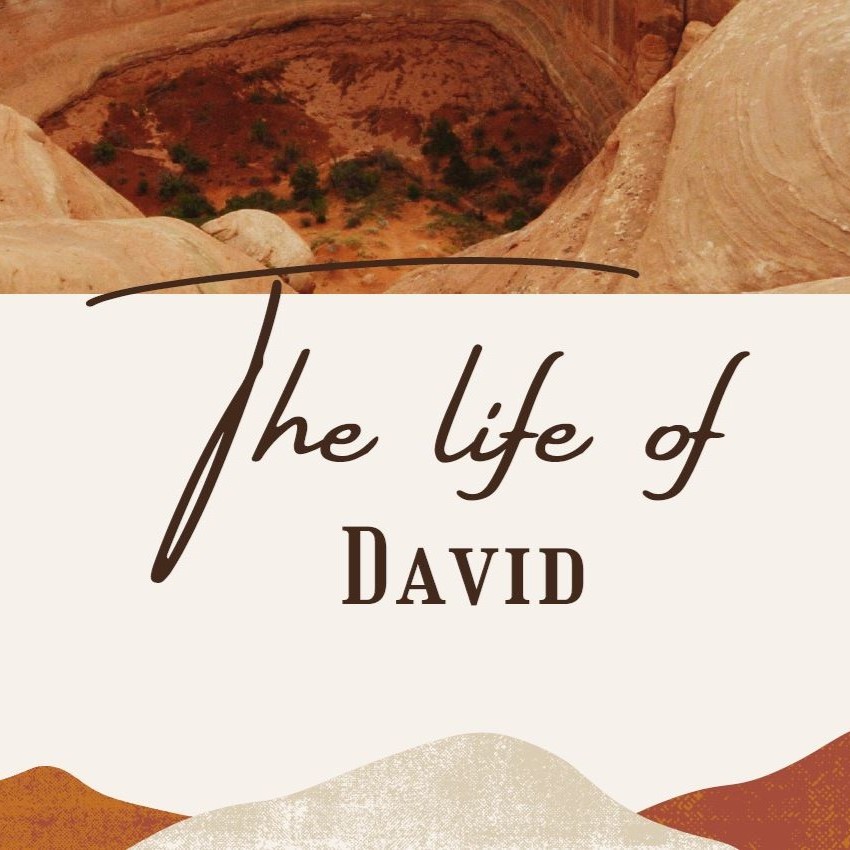
When I got to go there years ago, this is actually a picture I took near the Dead Sea and the cave of Qumran, which is like where they found the Dead Sea Scrolls and stuff.
But when you imagine some of the hills and mountains and other things that David is hiding in in the midst of this period, when we're reading today, there's some areas that may be a little bit more grassy than this, but a big portion of the text that we're reading, he's in an area that looks just like this. And also just consider the distances that he's traveling in. These stories.
[00:02:16] Speaker B: Are not happening as quickly as we're reading it. This is taking place over years of time where he's out in a region like this kind of you can imagine scrounging for food, figuring out each and every day what the next day holds, while at the same time the king of the entire nation is chasing him. And he's only basically been a shepherd up to this point.
So just an interesting little context. Be thinking about that picture as we work through everything.
I thought about man multiple, multiple times. I've literally just thought that this class could possibly go better if I didn't prepare anything. And we just sat together and read like, word after word. 1st Samuel 18, 1st Samuel 19, 1st Samuel 20.
We're going to do a lot of that today because this text is just so rich. And honestly, God's words are a lot better than anything that I can come up with. So. So we'll analyze things a little bit after it, but I want to make sure that we read this together. There's going to be a few chapters tonight that we do work through more quickly than others, so just be ready to keep up with the pace change, I guess. But starting in First Samuel, I think this is chapter 18. Yeah. And I'll just read from the very beginning.
All right. After David had finished talking with Saul, Jonathan. So this is Saul's son, became one in spirit with David, and he loved him as himself.
From that day, Saul kept David with him and did not let him return home to his family. And Jonathan made a covenant with David because he loved him as himself.
Jonathan took off the robe he was wearing and gave it to David along with his tunic, even his sword, his bow and. And his belt. So this is literally Jonathan giving up the things that proclaim that he's part of the royal lineage.
This is Jonathan proclaiming that he, in this covenant with David is just certifying like you're going to be the next guy to take this stuff on.
[00:04:29] Speaker B: This is the same word, by the way. This. Where is it? The robe right here that's used for Joseph's robe or earlier on in Genesis, if you haven't done a word study on that.
[00:04:42] Speaker B: My Bible teachers and your Bible teachers have probably lied to your entire lives because that word has been interpreted as many as like the coat of many colors or something like that.
That was an ancient translation because they didn't know what that word actually meant. They've actually found.
[00:05:03] Speaker B: New evidence of that word in other texts in different places since that original translation. And it actually meant the coat of long sleeves. And that's because.
That's because these coats that people would wear in that day and age, you can think like they're going to have one or two pieces of garments or something like that. The king, though, would be able to have something that was longer, that took A lot more fabric than that essentially implied this person's rich enough to afford the sleeves on his arms.
So when Joseph is given that earlier on, there's some people out there that I found that still argue co me colors. But like most everybody is, like this is talk about long sleeves, but also I think my 3 year old would be devastated. And I don't think you're going to hell if you think it was colors. So do whatever you want. But it's the same word here. Alright, so Jonathan gives him all that stuff. Whatever mission Saul sent him on, David was so successful that Saul gave him a high rank in the army. And this pleased all the troops and Saul's officers as well. When the men were returning home after David had killed the Philistine, the women came out from all the towns of Israel to meet King Saul with singing and dancing, with joyful songs of timbrels and lyres. And they danced and sang, saul has slain his thousands and David his ten thousands. Saul was very angry. The refrain displeased him greatly. They have credited David with ten thousands, he thought, but with me only thousands, what more can he get but the kingdom? And from that time on, Saul kept a close eye on David. The next day, an evil spirit from God came forcibly on Saul. He was prophesying in his house while David was playing the lyre, as he usually did. Saul had a spear in his hand. And you'll notice in all of these texts, Saul almost always has a spear in his hand from here on out when you read about him. And he hurled it, saying to himself, I'll pin David to the wall. But David eluded him twice. Saul was afraid of David because the Lord was with David and had departed from Saul.
So he sent David away from him and he gave him command over a thousand men. And David led the troops in their campaigns. And in everything he did he had great success because the Lord was with him. When Saul saw how successful he was, he was afraid of him. But all Israel and Judah loved David because he led them in their campaigns. Saul said to David, here is my older daughter Merab, I will give her to you in marriage. Only serve me bravely and fight the battles of the Lord. For Saul said to himself, I will not raise a hand against him. Let the Philistines do that. The But David said to Saul, who am I and what is my family or my clan in Israel that I should become the king's son in law? So when the time came for Merab, Saul's daughter, to be given to David, she was given in marriage to Adriel of Meholah. Now Saul's daughter Michal was in love with David, and they told Saul about it. He was pleased. He said, I will give her to him so that she may be a snare and so that the hand of the Philistines may be against him.
So Saul said to David, now you have a second opportunity to become my son in law. Then Saul ordered his attendants speak to David privately and say, look, the king likes you, and his attendants all love you. Now become his son in law. They repeated these words to David, but David said, do you think it is a small matter to become the king's son in law? I am a poor man and little known. When Saul's servants told him what David had said, David, Saul replied, say to David, the king wants no other price for the bride than a hundred Philistine foreskins. Yea, to take revenge on his enemies. Saul's plan was to have David fall by the hand of the Philistines.
When the attendants told David these things, he was pleased to become the king's son in law. So before the allotted time elapsed, David took his men with him and he went out and killed. 200 philistines, brought back their foreskins. They counted out the full number to the king that David might become the king's son in law. Then Saul gave him his daughter Michal in marriage. When Saul realized that the Lord was with David and that his daughter Michal loved David, Saul became still more afraid of him and he remained his enemy the rest of his days. The Philistine commanders continued to go out to battle. And as often as they did, David met with with more success than the rest of Saul's officers, and his name became well known.
So a lot is going on in this passage. And like the villain narrative of Saul, he's really like just starting to go uphill right now. We read the word earlier about Saul's height. Height, height. Height is mentioned throughout First Samuel. Height is the same word for arrogance.
You see the arrogance in Eliab, David's brother. You see the arrogance in the Philistine. Now you see the arrogance really, really, really coming out in Saul himself.
So I want to go over the three questions we discussed at the very beginning of class that have just helped me in my Bible study techniques. I guess starting small and getting to some really big questions. What does this text teach us about David?
What does 1 Samuel 18 tell us about David?
I am going to make this portion quick, but honestly, these three questions could probably take the next 45 minutes if we wanted them to. But what does this text tell us about David? He's humble. Yeah. I mean, he's being offered these things from the king. He has had these great victories. He has had these great moments. He knows that he's anointed at this point.
Like, he's literally been anointed. God has declared him king, says, I will be with you. Like, he know he has Samuel on his side and Saul's offering his daughters in marriage. And he's saying, who am I?
Like, I'm small.
I don't deserve anything like that.
[00:11:08] Speaker B: That's a big thing we learn about David. What else do we learn in this passage? Shows that he's cautious, I think, trying to figure out, what is it to be the king's son in law? What price am I going to have to pay to do this? Is that really what I want to do? You're right. I can see probably some confusion by him at this moment too. Like, just imagine being in his shoes. Like, he was anointed. Like, that's a death sentence. Like, if Saul figures out that in the midst of this situation and now he's being offered a place in Saul's family, like, how am I supposed to feel about that? Absolutely. He's had the spear thrown at him. Yeah. Has had the spear thrown at him. Yeah.
What else do we learn about him?
[00:11:51] Speaker B: I highlighted them in this text. It's all of the yellow, but I think there's six different portions where the same sort of word is used of people loving him.
Jonathan loves him. Michael loves him. The people of Israel and Judah love him. Saul's attendants love him. All. All of these people love David. What does David's name mean? Talked about that earlier.
Beloved. Yeah.
Like, is this not setting up, like, who David is by mentioning love, love, love, love. All these people are loving them. Him. But who continues to hate him in the midst of this?
[00:12:32] Speaker B: Saul.
So moving on, like, with that as some of our background knowledge, I was gonna say that him denying, basically continuing deny to deny kind of presents him more similar to the prophets than to previous leaders. Oh, yeah.
Oh, yeah. And we'll get. The text speaks a lot into that that we'll get into in a little bit. I've been confused. I'm studying myself right now. Like we mentioned earlier in this class that, like, the reason that Saul was originally rejected was because he offered a sacrifice to the Lord before a battle when Samuel was late and he was supposed to be there later on. And I think it'll be in Second Samuel.
David is dancing before. No, this is First Chronicles. David is dancing before the Lord with an ephod on his chest.
Who can wear an ephod?
Only priests. Or the sentence is death.
All right, well, he's doing that.
And then Saul offered a sacrifice and he got the kingdom strip from him.
We'll talk about that later, though, because I'm still confused.
But what does this text right here now teach us about God?
We're hearing a lot about David and Saul, the people in the court. But what do we learn about God through this text?
[00:14:03] Speaker B: Successes and failures are appointed by God. Absolutely. Yeah. And that pretty much hits the nail on the head that we'll probably be talking about for the next few chapters. There's going to be a lot of things that seem like David's really lucky or seem that this situation arose that just, like, happened to fall at David's lap, that there's laughable situations throughout the next however many chapters.
I mean, 100 foreskins turned into 200 foreskins. As, like, nasty as that is. Like, at the same time, if you're a Jew reading this text, you're like, oh, David got him all right. He asked for 100 and he got 200. That's crazy. All of these things are laughable. But you see that, like, God's love for David is stronger than Saul's hate for David to an extent.
And then finally, what sort of lessons can we get from this text ourselves? I think exactly what you just said applies to this as well. Ultimately, God is the one working.
So we get into 1st Samuel 19.
And oftentimes in passages of Scripture, things are lined up to compare, to contrast one another.
1st Samuel 19 and 1 Samuel 20 I basically gave titles to. Because these texts, even though there's more than what I just put on the screen, have a theme. And 1st Samuel 19's theme is all about deliverance. And going back to what was already mentioned, it's about ultimately deliverance from God. But there's four separate sections here. We'll read a few verses from each in this first section. Verses 1 through 7 of 1st Samuel 19. This is where David talks to Jonathan, and he's like, hey, I need help, bro. And Jonathan's like, yeah, let me go to my dad.
So Jonathan spoke well of David, verse 4, to Saul his father, and said to him, let not the king do wrong to his servant David.
He has not wronged you, and what he has done has benefited you greatly. He took his life in his hands when he killed the Philistine. The Lord won a great victory for all Israel. And you saw it and were glad. Why then would you do wrong to an innocent man like David by. By killing him for no reason?
And Saul listened to Jonathan, took this oath. As surely as the Lord lives, David will not be put to death.
I wasn't planning on saying this. This is just so funny to me.
The most difficult thing that I've had to learn in my role, like, as a minister full time, has been confrontation.
[00:16:43] Speaker B: That is not something that I want to do. That is not something that others want to do.
But the magical, crazy thing that seems to happen when that actually occurs is that things get better rather than getting worse in a lot of situations. This is a crazy passage right here. And a bunch of commentators pointed out, like, Saul is angry. He is, like, ready to kill this guy.
And it just takes Jonathan coming to him and saying, like, consider this for a moment. And even Saul, in all of his craziness with the Spirit of God tormenting him with all of this going on, is able in the midst of this, to recognize at least some truth and at least for a period, doesn't seek to put him to death. But that's from Jonathan speaking up.
Verses 8 through 10, though, Saul gets right back to it.
He sends a spear at David. This is immediately after, I think, in verse 8.
For those of you with your Bibles open right now, you'll correct me if I'm wrong, but I believe in verse 8. It shows us that David attacks the Philistines. And then immediately after that, he comes back. People are rejoicing. And then Saul is even angrier just looking at Hebrew words. I love, like, digging into the grammar of it. But David struck the Philistines and they fled.
And immediately afterwards, Saul strikes David and David flees. The exact same versions of each word are used back to back. And the text, in a way, is almost telling us, like, Saul's basically treating David like a Philistine.
It's an analogy to one another that the author is just really creative in adding into the text that he's telling us about. The story following this is Michael's deception. If you guys remember that one.
If you.
[00:18:39] Speaker B: Ever snuck out of the house when you were little and just created, like, a fake person in your bed for a little bit in case your parents came in. Nobody else did that, okay?
[00:18:49] Speaker B: But if you ever did anything like that, you'll understand what Michael did. It pranked people for at least a little bit for David to crawl out a window. He escaped, but what's interesting is in each of these situations, in some way or another, it's based on people's ability.
It's based on Jonathan speaking up, David dodging Saul. Michael, thinking of this creative trick. Well, in verses 18 through 24, it's the last deliverance passage in 1st Samuel 19.
And David goes to Samuel at Ramah. And if you're reading this, you're like, alright, how is Samuel gonna rescue him? Well, it's a really weird story. Samuel does nothing to rescue him.
This situation happens that I'm still a little bit confused on. But Saul sends people after David. They begin to walk up Ramah, the high place. And as they're walking up, they suddenly get stopped by the spirit of God and they begin to prophesy like crazy.
And then they are not able to go up the hill for some reason because of that. So they go back home. Saul sends another group, same thing happens, they go back home. Saul sends another group, same thing happens, they go back home. You see Saul in like his dad voice saying, well, some man's got to handle this now. And then Saul decides, all right, I'm going to be the one that walks up the hill. And the situation that's very awkward happens where Saul walks up the hill.
But the Spirit of God came even on him. And he walked along prophesying until he came to Naioth. He stripped off his garments and he too prophesied in Samuel's presence. He lay naked all that day and all that night. And this is why people say, is Saul also among the prophets? Do you guys remember the first time that phrase of Saul, also among the prophets was used? This is really interesting. It's kind of a bookend to this phrase.
So we had mentioned that is still a phrase that's used in Israel to this day to essentially describe.
I would not expect that person to be doing that thing.
The first time that that phrase is used for Saul is right after his anointing where he prophesies and people are essentially saying, wow, I wouldn't expect that like meek boy to be doing that incredible, amazing thing and prophesying.
[00:21:15] Speaker B: And then you have the Saul of 1st Samuel 19.
That is all of a sudden they're saying the same thing. But what do they mean this time?
I would not expect that great evil man to be doing some prophesying in the midst of this. But what else is this text trying to teach us? A lot of commentators point to this last section to essentially say.
[00:21:41] Speaker B: Person doing something, person doing something, person doing something. This is all God's doing. And what a lot of people who really dig into this stuff seem to point out, that I just can't explain as good as they can, is that this text at the end is essentially trying to also say God is involved in all of this.
[00:22:04] Speaker B: God is playing a part in all of the deliverance messages or the deliverance moments of David's life.
And then you get to 1st Samuel 20, where the theme essentially is covenant.
In 1st Samuel 18, Jonathan makes a covenant with David. This is the first thing we read in class tonight. He loves him as himself. In 1st Samuel 20, David is concerned that Saul is going to kill him. Jonathan says, hey, he hasn't talked to me recently about that. But at this point, Saul, knowing that Jonathan loved David, probably wouldn't have talked to him. So they concoct a plan.
It's the story some of you may have learned in Bible class growing up, where they concoct the plan where he'll go to dinner with Saul.
If Saul is angry about David not being there and seems to want to kill him, then he's going to shoot an arrow a certain distance. Tell a boy like the they're really far. That means David needs to flee.
If the arrow lands short and he says it's safe to come in, that means David's safe to come in. But in the midst of this, they continue on in this covenant type language. But if my father intends to harm you, may the Lord deal with Jonathan, be it ever so severely. If I do not let you know and send you away in peace, may the Lord be with you as he has been with my father. And but show me unfailing kindness, like the Lord's kindness, as long as I live, so that I may not be killed. And do not ever cut off your kindness from my family, not even when the Lord has cut off every one of David's enemies from the face of the earth.
So Jonathan made a covenant with the house of David, saying, may the Lord call David's enemies to account.
And Jonathan had David reaffirm his oath out of love for him, because he loved him as he loved himself.
Later on, he finds out that Saul is angry. Saul does want to kill David. He shoots the arrow really, really far.
And he says to David, essentially the bad news go in peace, for we have sworn friendship with each other in the name of the Lord, saying, the Lord is witness between you and me and between your descendants and my descendants forever.
So if you studied much of the Bible before, you've probably heard the word covenant used in different contexts.
You have New Testament, Old Testament, new covenant, old covenant.
You have various covenants that God made with certain early people within the text. One of the most significant ones that's really, really brutal. That kind of shows the idea of what a covenant would have been is Abraham's in Genesis 15. In Genesis 15, Abraham has this covenant with God where God promises him, like a people that will come out of him.
But this crazy thing happens where God commands Abraham to cut multiple animals in half.
And after cutting each of these animals in half, this was actually not something that was original to the Bible. They found a lot of Near Eastern peoples would utilize this language a little bit. But the idea was when they would cut these animals in half, one party would walk through one way and the other party would walk through the other way. And as they walked through, the idea was they were essentially saying, like, if we don't keep our word, what happens to these animals should happen to us.
[00:25:40] Speaker B: If you study ancient peoples very much, one of the things that I respect that the most about, like, people a long, long, long time ago is how just absolutely true they were to their word.
It was a hardcore thing in that day and age to give your word to someone. We throw around words like promise or words like I will, or yeah, that's on me very, very often. But this was a serious, serious, binding contract in their day and time.
At the beginning of this covenant, Jonathan was giving away his kingship essentially to David in 1st Samuel 18, like we read earlier. But then here he's also saying, like, not only like, is all this occurring, but may the Lord be, oh, if I may, but if my father intends to harm you, may the Lord deal with Jonathan, be it ever so severely. So Jonathan's saying, like, this is on me if things go awry. But in all of these covenants, they had this big, deep language. It was a super important thing. It was a drastic contract they were writing up that didn't just simply deal with what they were promising, but the punishments that would occur in if they didn't abide by those promises. But I want to get to the root of this. If you've never thought about it before, what's the goal of a covenant?
In all of these covenants, in every single covenant that occurs within Scripture, what is the ultimate goal?
[00:27:24] Speaker B: In every single covenantal passage, you will find either the Hebrew word or the Greek word used very, very nearby. Shalom and arene.
Shalom. You guys probably have recognized more coming from Hebrew, but it essentially just means peace.
[00:27:47] Speaker B: The desire of a covenant more than Anything else was peace.
Now, the question is, how did ancient people, though, think about the word peace?
Because when you really start digging into these texts, like we talked about in class one, we all have our own lenses, and when we're reading Scripture, we see certain words and we interpret it in a very specific way to us. Well, how did they think about peace?
Well, I'll start by saying how we think about peace. I mean, for my daughter, and oftentimes for me, it's like butterflies and rainbows and just, like, laying back on the beach or whatever.
More often than not, in a lot of the text, almost in every biblical text, that refers to these words, but in texts outside of just the Bible as well, when these words are used, it's in some really weird situations that we wouldn't think of as peace.
It was in the midst of a break in a battle.
Not the battle ending, but just a pause in the battle. It was in the midst of, like, harvesting crops.
It was in the midst of situations where things still were requiring a lot of hard work, a lot of sweat, but ultimately, like, there was a confidence or a calmness in the midst of the craziness around them.
[00:29:19] Speaker B: I talk about this way way too much. But one of the best ways to learn about the ancient thought process behind peace is the psalm, Be still and Know that I'm God. When you read that psalm, immediately afterwards, the author begins to describe the things that God's going to do. And he's saying, I will break the enemy's spears. I will, like, light these things on fire. But, like, the Hobby Lobby, be still. A no is like, in all these, like, beautiful pictures with the beach in the background. But, like, that's not how it was originally used. It was used in the midst of, like, chaos.
But the idea. The idea behind that passage, specifically in Psalms, is when you get into the person that God is speaking to, God's not speaking to the follower or believer in him. He's speaking to the enemies of God.
So be still and know that I am God. Isn't God looking at you all and saying, just be still, be calm. It's okay. Like, even though that sounds great, his message is, y' all stay here. I'm looking at the chaos.
Be still.
Recognize who the Lord is. And the. In the midst of all this, he's saying, I'm the God who is more powerful than all of those crazy things that you're having to face. But at the same time, while it may not be the exact same version of peace that we're thinking about when God says that to your enemies, do you begin to get a little stiller, to have a little bit more confidence yourself in the midst of that? Yeah, this covenantal language is very, very important. God uses it with us a lot. And in 1st Samuel 20, between David and Jonathan and their just amazing friendship, they're using it between them, they're using it amongst themselves, but also with God as well.
Alright, now is the passage that if any of you guys get angry about anything that I say today, just don't talk to me afterwards and we'll figure it out. But 1st Samuel 21, fascinating passage with a portion of the New Testament that is hotly debated.
[00:31:40] Speaker B: After all of this. So after Jonathan tells him to flee, David went to Nob to Ahimelech, the priest. Ahimelech trembled when he met him and he asked, why are you alone? Why is no one with you? David answered Ahimelech, the priest, the king. Now is this true? The king has sent me on a mission and said to me, no one is to know anything about the mission I am sending you on. As for my men, I have told them to meet me at a certain place.
So that is like the worst job of lying I've ever heard in my life.
Now then, what do you have on hand? Give me five loaves of bread or whatever you can find. The priest answered David, I don't have any ordinary bread on hand. However, there is some consecrated bread here, provided the men have kept themselves from the women. David replied, indeed, women have been kept from us as usual whenever I set out. The men's bodies are holy even on missions that are not holy. How much more so today?
So the priest gave him the consecrated bread, since there was no bread there except the bread of the presence that had been removed from before the Lord and replaced by hot bread on the day it was taken.
Now, one of Saul's servants was there that day, detained before the Lord. He was Doeg, the Edomite, Saul's chief shepherd. David asked Ahimelech, don't you have a spear or sword here? I haven't brought my sword or any other weapon because the king's mission was urgent. The priest answered, the sword of Goliath, the Philistine who you killed in the valley of Elah, is here. It's wrapped in a cloth behind the ephod. If you want it, take it. There is no sword here but that one, David said, there is none like it. Give it to me. I already went back to 1st Samuel 16. I guess talking about Goliath's like armor and everything. It actually doesn't mention the size of his sword any point. But I'm guessing it wasn't a little dagger. I'm guessing like he's carrying something giant out into the wilderness. But going back earlier, in the midst of this, David has just essentially gone, this priest, to give him the consecrated bread, the bread of the presence.
In Leviticus 24, 5, 9, it makes very clear that the only people ever allowed to partake in the bread of the Presence are consecrated holy Levite priests who go into that room.
So in Jewish history, immediately after this passage, probably for years, like we're talking about a thousand years after this passage was written, priests or rabbis debated this back and forth.
And the debate was, did David just do something that should make him be put to death?
Did he just sin in a really awful. It really seems like he's lying.
It really seems like he just took this bread that was. We have a very specific rule that you are put to death, that you are not supposed to eat that bread.
Like, what in the world is going on here? There are some who decided to make up arguments against this and essentially say, well, what's happening here is that David just doesn't want the priest to die.
So he's being kind of shady. And the way that he's talking about this is like so obvious that the author of this text is trying to get us to see that. It's almost like David is saying these things and is like, wink, wink. Because if he tells him what's really happening and that guy helps him, then he's dead. If that guy has the excuse. Well, I don't know what he was doing. He never told me exactly, then maybe he should live. But this was debated back and forth.
And then Jesus talks about it in Mark, chapter two.
So Mark, chapter two. I'll put this at the very bottom.
On the Sabbath, Jesus was going. So on the Sabbath, Jesus was going through the grain fields. And as his disciples walked along, they began to pick some heads of grain.
The Pharisees said to him, look, why are they doing what is unlawful on the Sabbath?
He answered, have you never read? When David did what he and his companions were hungry and in need.
In the days of Abiathar, the high priest, he entered the house of God and he ate the consecrated bread, which is lawful only for priests to eat.
And he gave some to his companions.
Then he said to them, the Sabbath was made for man, not man for the Sabbath. So the Son of Man is Lord, even of the Sabbath.
[00:36:42] Speaker B: So did Jesus just say that David was sinning or not sinning? Did Jesus just say that he was okay in his sin.
[00:36:58] Speaker B: Or okay in what may have not been sin? He definitely seems to be saying that he's okay regardless of the fact.
If he's saying that he's okay in what he did, what are.
I'm not expecting an answer here because I'm scared of them. But what are the implications of.
[00:37:20] Speaker B: In the way that we interpret law and that we interpret commands and in how we interpret text?
[00:37:30] Speaker B: That gets into some very spicy discussions.
[00:37:36] Speaker B: What's interesting when you look at Mark 2 and the very beginning of Mark 3 is. Mark 2 is actually. I actually opened my Bible to it. It's all about Jesus doing like crazy off the wall things.
[00:37:51] Speaker B: In Mark 2 verses, I guess the first 12 verses, he heals a paralytic. It's the guy lowered through the roof. People are like, what is this? And then Jesus makes the big, like, you know what? I'm not only going to do that, I'm going to forgive his sins. Ooh, that's a hot button topic.
Immediately after that, Jesus calls tax collectors to be with him and he begins eating with sinners.
Immediately after that, Jesus essentially says, like, y' all don't need to be fasting while I'm here. All right, well, what is that saying?
Then you have this passage here, and then you have Mark 3 immediately after this. And he entered the synagogue and a man was there with a withered hand.
And they watched Jesus. So this is still on the Sabbath. They watched Jesus to see whether he would heal him on the Sabbath so that they might accuse him.
And he said to the man with the withered hand, come here.
And he said to them, is it lawful on the Sabbath to do good or to harm, to save a life or to kill?
[00:39:00] Speaker B: And the people were silent.
[00:39:03] Speaker B: And Jesus looked around at them with anger and he was grieved at their hardness of heart.
[00:39:13] Speaker B: I don't want to call out anything that's touchy that like this sort of scenario could apply to. I think there's some other texts that talk about this topic. But I do at least want to say, based upon this text, we have to make sure.
We have to make sure in anything that we are telling people to do that involves us bringing about a command from God, that we are not only thinking about the command, but we're thinking about the heart of the command.
Jesus was very clear in this passage that when it came to David, he was starving.
And what it seems to be that he's saying here is.
[00:39:58] Speaker B: That man gave him some bread, and to a certain extent, he was able to overlook that rule.
What he seems to be saying to the people who were mad at them picking grain on the Sabbath was the same thing. What he seems to be saying, whether he can heal or not on the Sabbath was the same thing.
[00:40:17] Speaker B: I just want to make sure, when we discuss.
[00:40:22] Speaker B: Commands and hard topics with people, that at the heart of everything, we're thinking more like David, which is going after the heart of God, rather than simply looking at the text and just saying, here are the exact explicit words. Just do it. Bye.
[00:40:41] Speaker B: But then immediately after that, man, I can't believe we're almost out of class. We can stay here another hour if y' all want. But.
[00:40:48] Speaker B: After that, David goes to Gath, which is kind of crazy. I have no idea why he would have gone to Gath. He does have the sword of Goliath now, who was from Gath. So maybe he's like, yeah, they'll accept me there.
But he goes to Gath immediately afterwards.
Really weird scene. It says he spittles on his beard and lets it run about everywhere and just acts crazy because he realizes it's a bad situation and he gets out of there. This is really another weird situation that seems to totally come out of David's head. But then you have Psalm 34.
Starts by saying, this is, like, written from the situation where David escaped this random guy. Well, when David escaped that random guy, that's the story where he was spitting on his beard and acting crazy. And in the midst of Psalm 34, there's nothing funny. It's literally just a psalm praising God for rescuing us in the midst of hard times.
So what is David pointing to there?
Yeah, he may have come up with an idea in the midst of this. But ultimately, the peace that we find ultimately, like this security and this escape from difficult measures, all of that ultimately comes down to God and God alone.
[00:42:09] Speaker B: I'll just. I had a lot more than this. I'll just real quickly mention a couple things. I'll go over some overviews, and then we'll back up a chapter two next week. But first, Samuel 22, quick overview.
David gathers some men to him.
It's an interesting study, like, looking at the type of men he gathers. It's like a rough crew, but he asked them to travel alongside him. And then he takes his parents, he crosses. So he's in southern.
This is weird. This is southern Israel. This is the Dead Sea. Other side of the Dead Sea is Moab. He's in this part right here. He crosses to the other side of the Dead Sea and he asks the king of Moab to protect his parents. Any idea why he may have asked the king of Moab, this is an enemy to Israel, to protect his parents.
There's a really interesting theory out there.
What ancestor of his was from Moab?
[00:43:03] Speaker B: Ruth?
[00:43:05] Speaker B: I mean, that's his great grandma. So like maybe he's like, hey, like I know we're enemies, but like I got some blood still. Like, will you help me here? But immediately after doing that, while David's finding safety, Saul. It's this really awful story. It's almost like the climax of Big bad Saul where he walks into Nob. He finds out that these priests helped David. He commands them to be killed. His own men saying, we can't kill priests of God. And then doeg the edomite, evil, evil man that was not from the nation of Israel volunteers to do it. And he not only kills the priests, but he slaughters the entire population of Nob. Only Abiathar escapes and he ends up finding peace with David. That is like climax a big bad Saul.
[00:44:02] Speaker B: And we'll just start there next week. I did want to mention man.
Okay, this week just some readings. I'll put this on the groupme, but Psalm 34 and 54 both directly apply to the text that we read about today.
I challenge you all to read that. And just if you haven't learned how to pray, psalms, like to read them. But then pray for the things that it's discussing in the as you're going about. That could really help you. Self evaluation.
How are you dealing with humility right now?
That's a question I feel each of us, especially myself, need to ask every single day. But then just an extra study, try to piecemeal together all the places that David went in the midst of this. It's crazy the way that he crisscrossed. And then just imagine not only the stories, but how would your trust in God be tested in the midst of a year long desert trek, in the midst of not knowing where your food's going to come from, in the midst of a man chasing you. But then how does that apply to your life today?
[00:45:02] Speaker B: All right, that's classic.